United States
 Australia
 United Kingdom
 Singapore
 Malaysia
 Thailand
 Indonesia


.jpg)
What is the right budget split to allocate to creator marketing?
As creator marketing budgets grow, brands must look beyond just creator fees and fund the distribution, rights, optimisation and measurement that drive real outcomes.
Unilever wants an “influencer in every postcode.”
The CPG behemoth now works with around 300,000 creators globally and has indicated that half of its €8.1 billion brand-marketing investment is shifting towards social and influencer channels.
L’Oréal, meanwhile, works with approximately 500,000 creators globally.
And that’s the same route many brands are heading towards global ad spend — Creator marketing has clearly won the budget argument, as the global creator ad money gears towards the $44 billion mark this year.
But should every brand now follow suit and put half its advertising spend in the name of influencers?
Not necessarily.
The growth in investment proves that creator marketing delivers commercial value. Brands do not continually increase spending on a channel that produces nothing.
But allocating 50% of the total marketing budget to creator marketing can also be an overcorrection, particularly when brands confuse producing more content with building an effective media strategy.
More creators do not automatically mean more impact. And virality is an outcome, not a media plan.
The creator fee is not the creator budget
Brands frequently begin with the wrong calculation.
They decide how much they can afford to pay creators, commission the content and assume the campaign is funded.
But creator fees are only one component of the investment.
A complete creator-marketing budget may also need to cover:
- Content usage rights
- Paid amplification permissions
- Whitelisting or creator licensing
- Production and editing support
- Platform boosting
- Campaign management
- Reporting and attribution
- Brand-lift or incrementality studies
- Ongoing community engagement
Creators may also charge additional fees when their content continues to run in paid media beyond the original campaign period.
Budgeting only for the post creates a familiar problem: the brand ends up with excellent creative but no money left to distribute, optimise or measure it.
That is not a creator-marketing strategy. It is a content purchase.
Bring back the 30:70 principle

Historically, marketers often worked with a rough 30:70 split: around 30% of campaign investment went towards creative production and 70% towards media and distribution.
Creator marketing should be considered in much the same way.
On a $100,000 campaign, an illustrative starting point could be:
$30,000 for creator partnerships and content production.
$70,000 for amplification, testing, optimisation and measurement.
The ratio is not a universal rule. Some creator partnerships require higher talent fees, more complex production or extensive licensing. An always-on ambassador program will look very different from a short-term performance campaign.
But the underlying principle remains important:
Great content without adequate distribution rarely delivers its full commercial value.
The industry is moving towards a model in which creator content is treated as premium advertising creative.
Creators produce it because they understand audiences, platforms and culture. Brands then amplify it through paid media to guarantee reach, control frequency and optimise towards business outcomes.
Organic distribution can reveal what resonates and paid media turns that insight into scale.
Fifty per cent is a strategy, not a benchmark
Unilever’s enormous creator network makes sense given its size.
The company operates across brands, categories and markets that require a constant supply of locally relevant content.
Its 300,000-creator network is supported by in-house teams, agencies, technology and market-specific management models.
It also activated 50,000 creators around the 2026 FIFA World Cup, reaching a combined audience of more than 600 million, according to the company.
That infrastructure cannot be copied simply by moving a percentage on a spreadsheet.
A challenger brand launching one product does not have the same needs as a multinational trying to maintain cultural relevance across hundreds of brands.
There is no universal percentage because there is no universal marketing problem.
A product launch requires a different investment model from an always-on brand program. A retailer trying to drive weekend sales has different needs from a CPG company attempting to reshape long-term brand perception.
The budget should follow the objective, not the latest industry headline.
Different objectives require different splits

- An awareness campaign will usually require strong creative, relevant creator reach and enough paid amplification to build frequency.
- A performance campaign will need a greater proportion of working media, multiple creative variations, audience testing and constant optimisation towards sales, leads, traffic or app installations.
- A brand-building program may invest more heavily in long-term partnerships, ambassador relationships and higher-quality storytelling that builds familiarity over time.
- A content-production campaign might prioritise the number and range of assets over creators’ organic reach, since the content will primarily be distributed through the brand’s paid channels.
The split should also change as performance data arrives.
Brands should put more money behind creators and assets that are working, test new variations and reduce investment in content that fails to hold attention or convert.
Fixing the budget allocation at the beginning and refusing to revisit it ignores one of creator marketing’s biggest advantages: speed.
Strong creative can still be underfunded
The clearest sign of an underfunded campaign is strong content with insufficient distribution.
The assets look good. Early engagement is encouraging. But too few people see them for the campaign to generate meaningful business impact.
Another warning sign is a lack of creative variation.
Performance media requires testing. Brands need different creators, hooks, edits, lengths, messages and calls to action to understand what moves audiences.
One expensive hero asset gives the media team nowhere to go when performance begins to decline.
But campaigns can also be overfunded in the wrong areas.
Millions of cheap impressions may look impressive in a report while delivering poor watch time, weak engagement and little commercial return.
A low CPM only proves that attention was inexpensive to buy. It does not prove that the attention was valuable.
Reach and engagement are not profit
.jpg)
The creator industry is still transitioning from accessible platform metrics towards genuine commercial measurement.
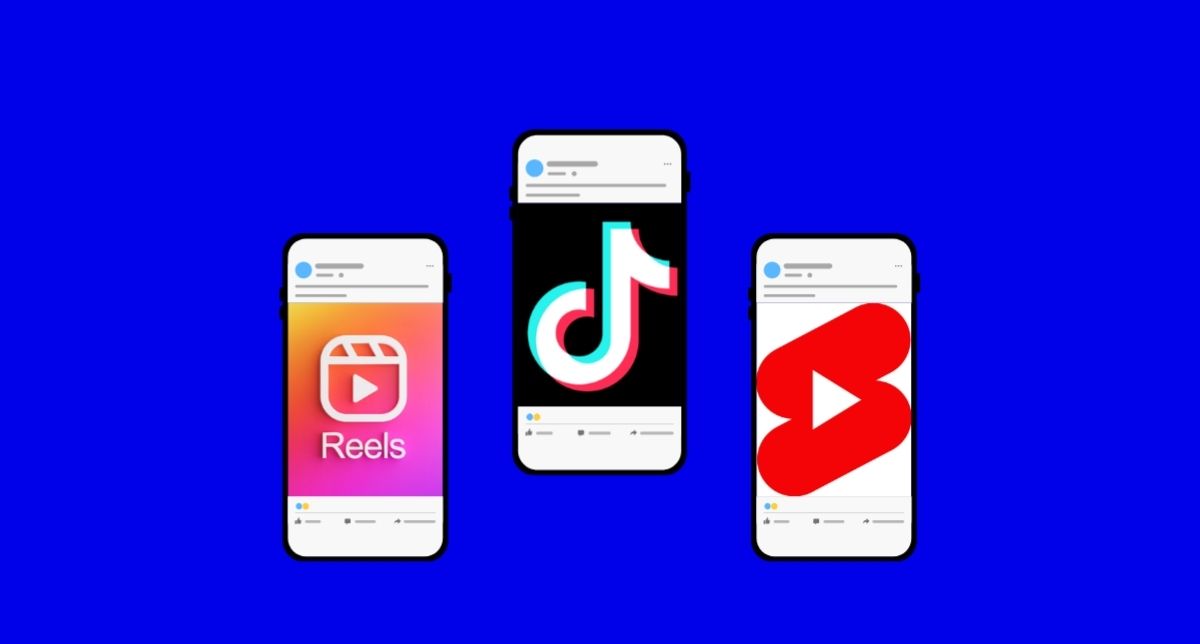
TikTok, Meta, YouTube, and other platforms operate as separate walled gardens, each with its own attribution systems and definitions of success.
That fragmentation pushes brands towards metrics that are easy to access:
Views. Reach. Engagement. CPM.
Those measures remain useful. But they are indicators of delivery and efficiency, not necessarily proof of incremental growth.
More sophisticated brands are beginning to connect creator activity with CRM systems, ecommerce data, advertising platforms and sales outcomes.
Instead of asking which creator received the most likes, they can ask:
- Who delivered the lowest customer-acquisition cost?
- Which creator attracted customers with the highest lifetime value?
- Which content produced incremental sales?
- Did creator assets outperform traditional brand creative?
- Did the campaign improve brand consideration?
- Would those purchases have happened without the creator activity?
This is where the industry must go next.
Performance and brand building need separate jobs
Creator campaigns should not be forced to deliver every objective through a single post.
Short-term performance comes from testing creator content, amplifying what works and optimising towards measurable actions.
Long-term brand building comes from consistency.
Repeated partnerships create familiarity, trust and distinctive associations that one-off promotional posts struggle to achieve.
The strongest brands therefore build a portfolio.
Some creators and assets are optimised for immediate sales. Others build awareness, credibility or cultural relevance over time.
That distinction matters because transactional media will often appear to deliver a stronger immediate return than brand-building activity.
But consistently favouring whatever converts fastest can weaken the brand’s long-term desirability.
Reach has never been easier to buy. Trust has never been harder to earn.
So, how much should brands spend?
.jpg)
There is no magic percentage.
Brands should invest enough to fund the complete system: creators, creative production, rights, paid distribution, optimisation and measurement.
They should reserve enough working media to ensure strong content reaches a meaningful audience.
They should build enough creative variation to test and learn.
And they should never reallocate half their budget simply because another advertiser has done it.
The better question is not:
What percentage of our budget should go to influencers?
It is: What job do we need creator marketing to perform, and what will it cost to produce, distribute and prove that outcome?
Creator marketing has earned a bigger share of the media plan.
But more spending is not the strategy. Knowing where every dollar works hardest is.

.jpg)
.png)
.png)
.jpg)




.jpg)
.jpg)
.jpg)

.jpg)


.jpg)








.png)
.png)










.png)
.png)
.png)
.png)
.png)
.png)
.png)
.png)
.png)
.png)
.png)
.png)
.png)
.png)
.png)
.png)
.png)
.png)
.png)
.png)