United States
 Australia
 United Kingdom
 Singapore
 Malaysia
 Thailand
 Indonesia


.png)
Which creators to build relationships with (and which ones to pull the plug on)
Creator marketing is moving beyond discovery. Learn why brands need better creator intelligence to know who to keep, grow, reshape or let go.
The creator economy was once built on one-off activations.
Brands briefed a creator, launched the post, checked the numbers and moved on. For a long time, influence was often treated as a numbers game, with campaigns gravitating towards creators with the most zeros in their follower counts.
That model has evolved.
Creator marketing has matured into something more relationship-led. The best results often come when brands find creators who genuinely fit the audience, category and message and keep building with them over time.
But even relationship-led creator marketing is entering a new phase.
The real advantage is no longer just finding the right creators. It is knowing which creators are worth building with. That means understanding who to retain, who to grow, who to move into a different partnership model, and when a relationship has naturally run its course.
Because every creator partnership teaches a brand something.
It shows which formats perform, which audiences respond to, how a creator handles feedback, whether they deliver on time, how naturally they understand the brand, and whether their content continues to create value after the campaign ends.
The problem is that too many brands fail to capture that intelligence.
Instead, they start from scratch with every campaign. A new brief is written. A new creator list is built. A new round of outreach begins with the same questions asked.
The future is simple: not building bigger creator databases, but better creator intelligence.
Why do creator programs need memory?
A mature creator program should get smarter every time it runs.
It should know which creators consistently deliver, which are improving, which need clearer guidance, which are better suited to awareness, education, consideration, or conversion, and which partnerships no longer make sense.
That is a different way of thinking about creator relationships.
Instead of asking, “Who should we work with next?”, brands should also be asking, “What have we already learned from the creators we have worked with?”
This matters because long-term value in creator marketing rarely comes from a single post. It comes from the patterns that build over time.
A creator may not be the biggest name in a category, but they may not consistently deliver strong audience trust. Another may not generate the highest engagement, but its content might perform well when boosted. Another may be highly reliable, quick to respond and able to translate brand messages in a way that feels natural to their community.
Those signals are easy to miss when every campaign is treated as a fresh transaction.
The best creator programs are not just about discovering talent - they are about learning from talent.
The blame game never works

When a creator partnership underperforms or falls, the creator is often the easiest person to blame.
They are the face of the content. They are the person on screen. They are the most visible part of the campaign.
But performance is rarely that simple.
A campaign can underperform because the wrong creator was selected for the objective. It can underperform because the brief was unclear, the expectations were misaligned, the approval process diluted the idea, or the success metrics did not match what the campaign was actually designed to achieve.
This becomes even more important as more brands boost creator content through paid media.
A creator might be briefed to maximise engagement or watch time because those signals matter organically. But the media strategy might be optimising for reach. Those are not the same creative task.
Content designed to spark comments is not always the same as content designed to maximise efficient reach. Content built for organic audience response may not be the same as content designed to work as paid media. When strategy, creative, media and measurement are not aligned from the beginning, the creator is left trying to satisfy competing objectives.
That is not a creator problem. That is a system problem.
Creator marketing performs best when the creator is set up to succeed. That means clear objectives, strong briefs, the right level of creative freedom, aligned media strategy and measurement that reflects the actual goal of the campaign.
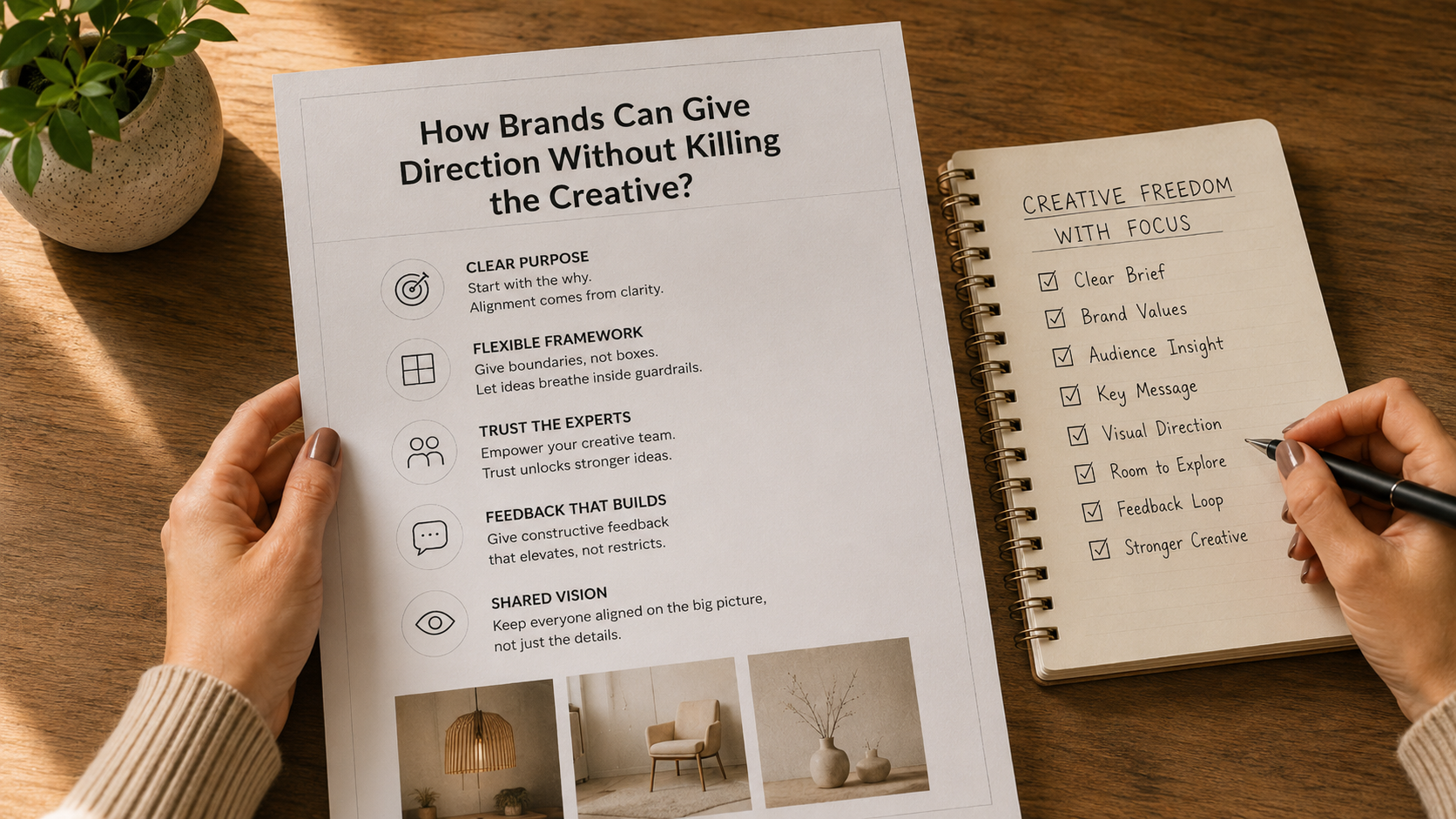
If the brief was the issue, read Fabulate’s guide to writing the perfect brief.
If the campaign was built for awareness, judging it mainly on engagement may miss the value it delivered. If it was built for conversion, views alone will not tell the full story. Before brands decide a creator “didn’t work”, they need to ask whether the system around the creator worked.
These metrics are not enough.

Follower count, engagement rate, views and audience size might matter. But they are no longer enough to decide who belongs in a long-term creator bench.
Industry's obsession with the F word - followers - is one of the least interesting signals on its own. The better question is whether a creator consistently creates value for the brand.
That value can show up in different ways;
- Audience relevance.
- Brand alignment.
- Creative quality.
- Reliability.
- Professionalism.
- Responsiveness.
- Content longevity.
- Commercial outcomes.
- Ability to take feedback.
- Ability to adapt across campaigns.
Brands should also pay attention to whether a creator improves over time.
Some creators become stronger partners with every brief. They learn the brand’s tone, understand what the audience responds to, sharpen their storytelling and build deeper trust with their community. Those are the relationships that compound.
The goal is not to find creators who deliver one strong campaign.
It is to identify creators who consistently deliver value whenever the brand works with them.
Brands need a creator portfolio, not a creator list
As creator programs scale, brands need to stop treating creators like interchangeable placements.
The most sophisticated programs are increasingly managed as portfolios.
That means different creators play different roles in the broader strategy. Some are strong awareness drivers. Others are better educators. Some build credibility in niche communities. Some are useful for product launches. Others are better suited to affiliate, ambassador or conversion-led work.
The goal is not to find one perfect creator who can do everything. The goal is to build the right mix.
That portfolio mindset helps brands diversify risk, identify emerging talent earlier and make smarter investment decisions over time. It also stops brands from judging every creator against the same objective.
A creator who is brilliant at education may not be the strongest driver of awareness. A creator who creates high-trust, lower-reach content may still be highly valuable in the right role. A creator who does not deliver immediate conversion may still be important for credibility and consideration.
The question should not simply be, “Did this creator work?” It should be, “What role does this creator play in our broader creator ecosystem?”
That shift moves creator marketing away from transactional buying and towards long-term capability building.
When to pull the plug?

A mature creator program is not just about finding and retaining creators. It is also about knowing when to pause, reshape or end a partnership.
That decision should be based on evidence, not instinct.
Brands need to look at performance across multiple campaigns, not isolated results.
They should assess;
- Audience response
- Creative quality
- Reliability
- Communication
- Efficiency
- Commercial impact over time
If a creator is improving and delivering consistent value, there is a strong case for deeper investment. If the creator remains a strong brand fit but commercial outcomes have plateaued, it may be worth moving them into a different model, such as affiliate or ambassador activity.
If the audience, objective, or content style no longer aligns, it may be better to conclude the partnership professionally rather than continue investing out of familiarity.
That should not be seen as a failure. It is part of properly managing the lifecycle of creator relationships.
Strong creator programs do not simply acquire creators. They actively manage where each relationship is headed and ensure investment flows towards the partnerships that create the greatest long-term value.

.jpg)

.png)
.png)
.jpg)




.jpg)
.jpg)
.jpg)
.jpg)

.jpg)


.jpg)










.png)















.png)
.png)
.png)
.png)
.png)
.png)
.png)
.png)
.png)
.png)
.png)
.png)
.png)
.png)
.png)
.png)
.png)
.png)
.png)
.png)