United States
 Australia
 United Kingdom
 Singapore
 Malaysia
 Thailand
 Indonesia


.jpg)
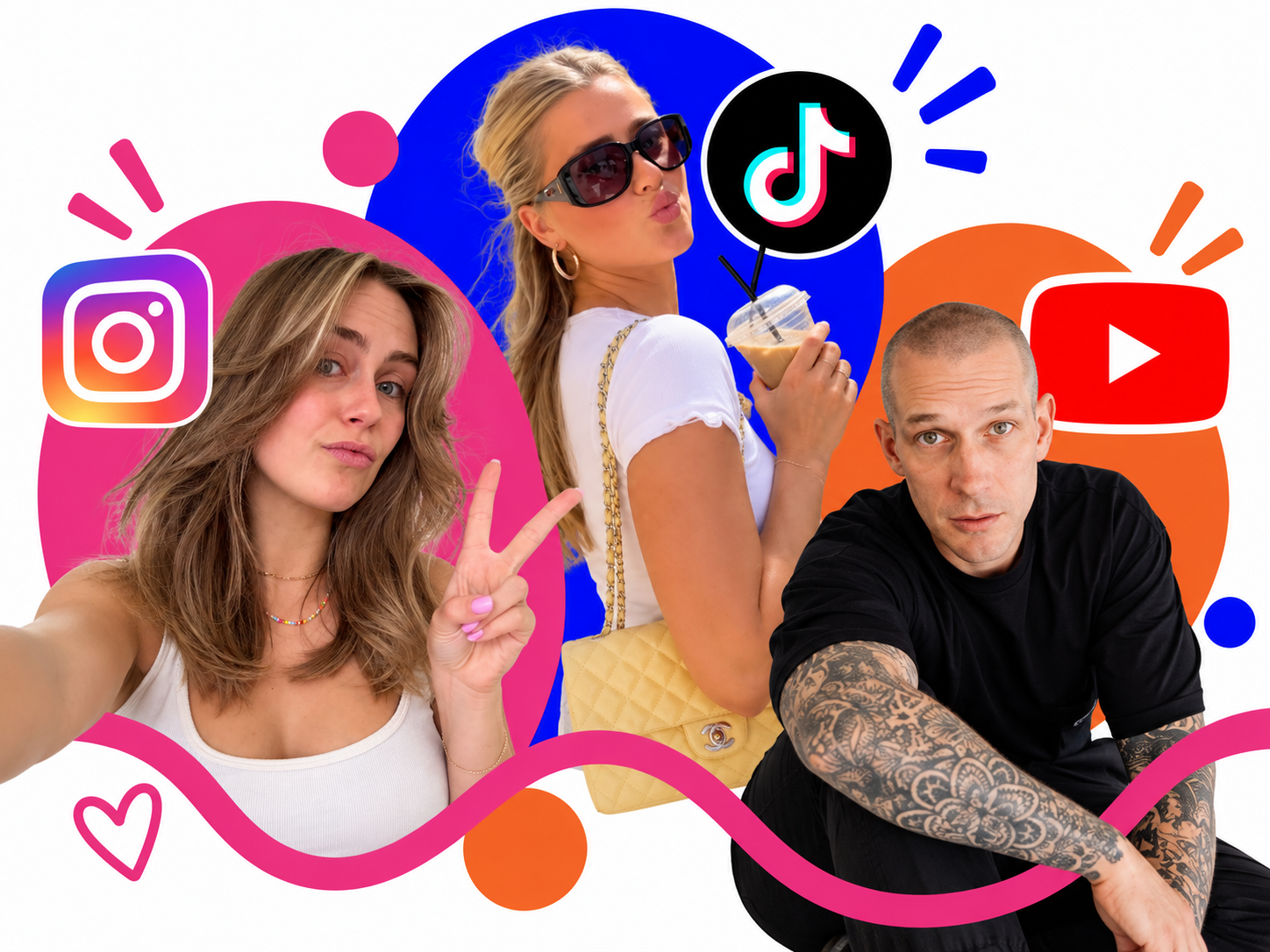
‘Famemaxxing’: How creators became Australia’s new celebrity class
Australia’s fame economy is going creator-first as influencers overtake traditional celebrities and reshape how brands value reach, trust and cultural relevance.
Australia’s celebrity hierarchy is being rewritten.
Actors, musicians and athletes once dominated the country’s fame economy.
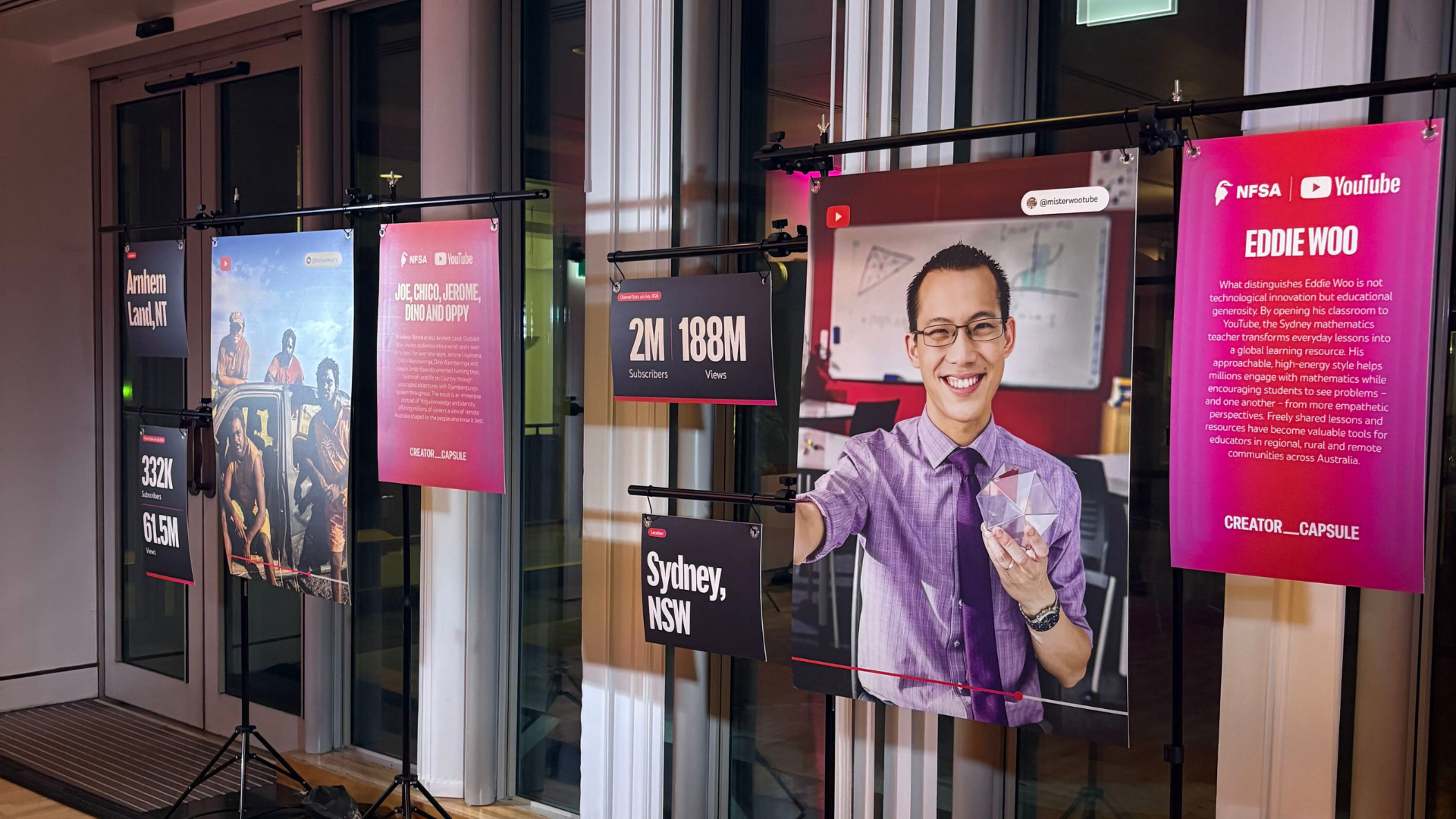
Today, content creators account for 19 of Australia’s 50 most famous people - more than any other professional category.
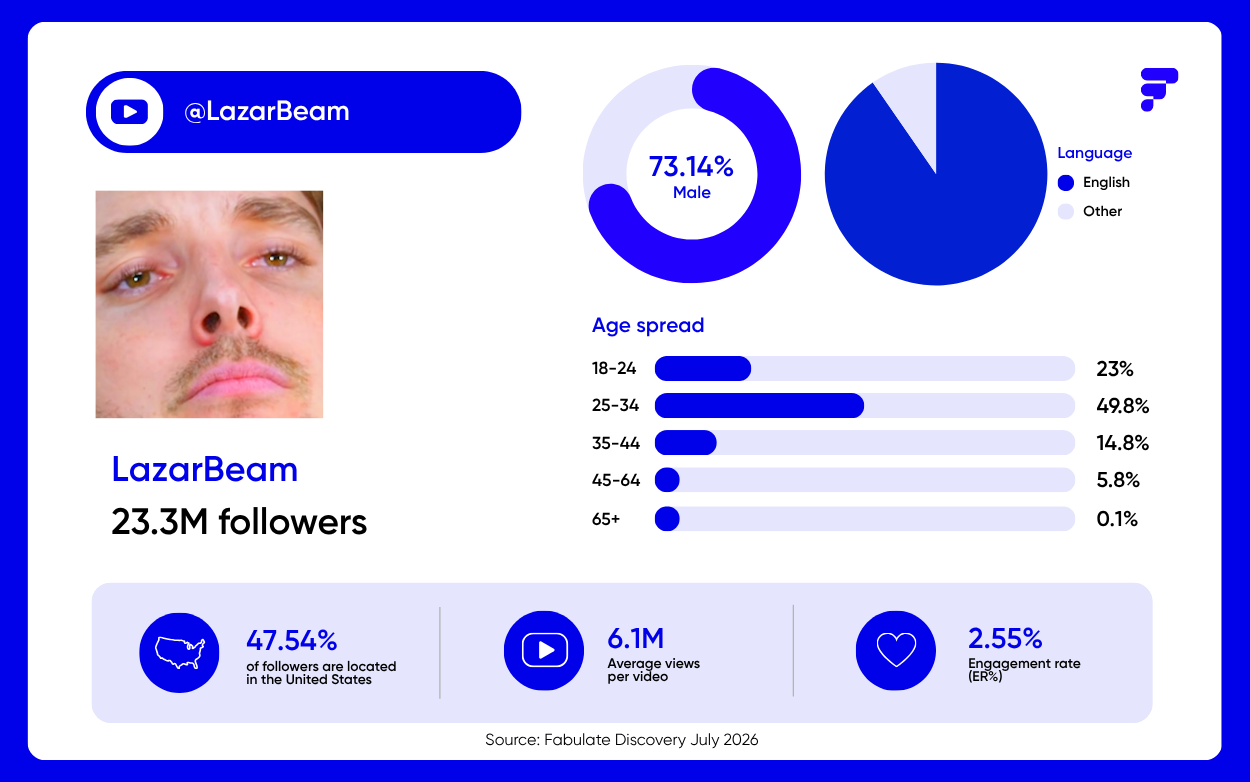
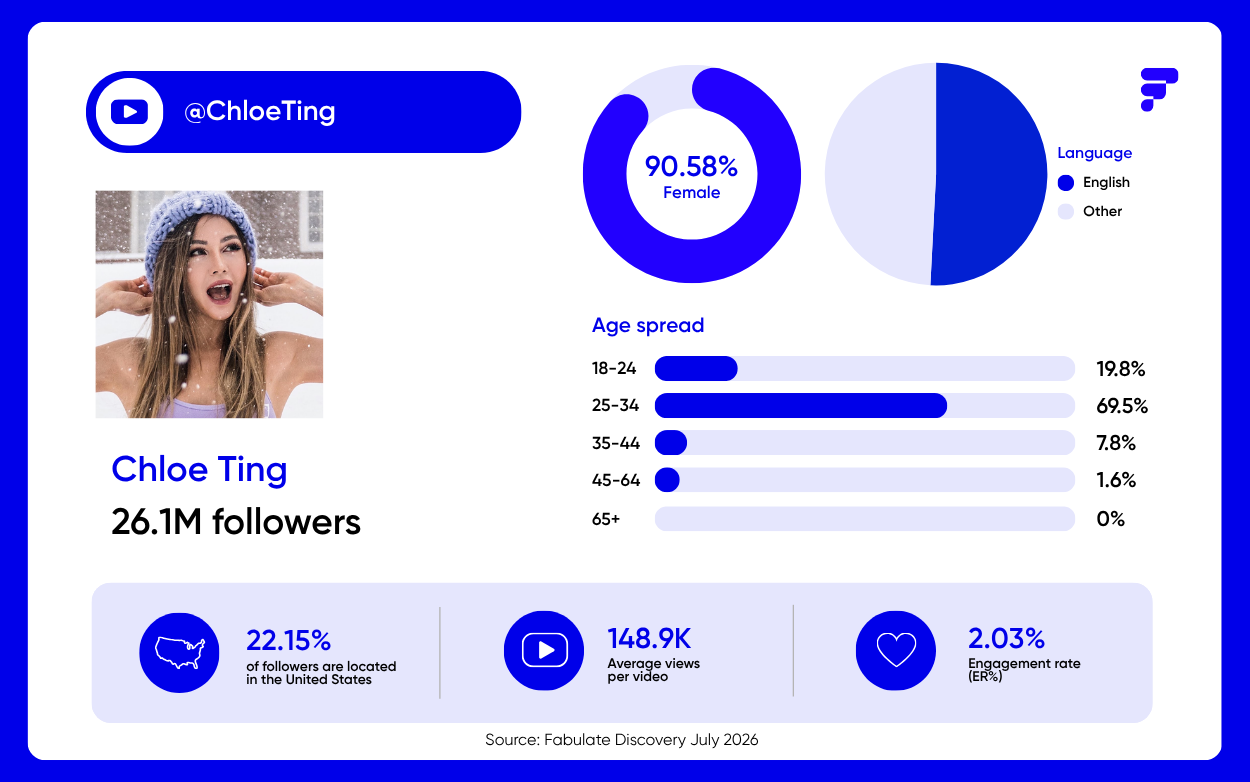
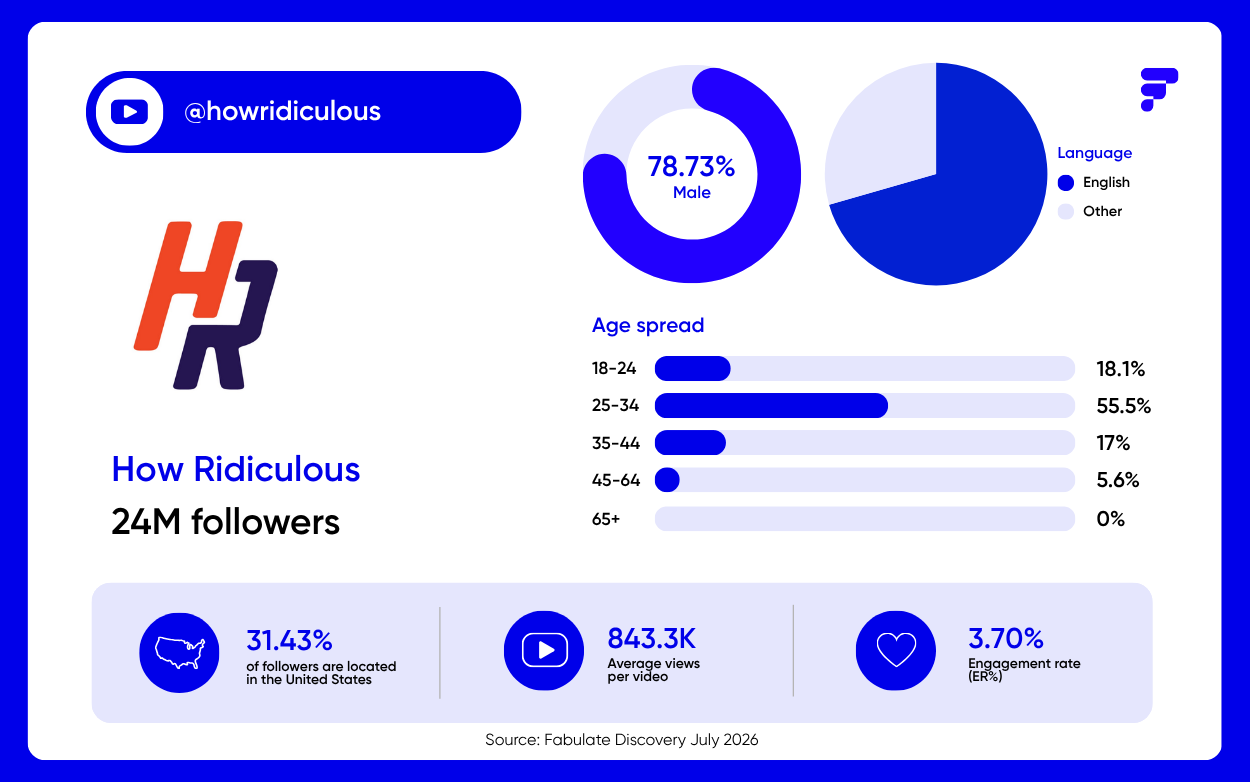
Four creators also make the top 10: Gaming creator LazarBeam at number four, Caleb Finn at six, Chloe Ting at seven and How Ridiculous at eight.
Creators are no longer waiting for traditional entertainment institutions to legitimise them. They have built their own fame machines.
Australia’s new celebrity class was built by algorithms
Rocket Agency’s 2026 Fame Report ranked public figures using a combination of global search demand, online media coverage and their combined Instagram, TikTok and YouTube followings.
Content creators represented 38% of the top 50, ahead of actors, musicians and athletes.
Rosé ranked first overall, followed by Chris Hemsworth and Hugh Jackman, before LazarBeam became the highest-ranked creator in fourth place.
The rankings by no means suggest that traditional celebrity is evaporating.
They show that film studios, television networks, record labels and sporting institutions no longer control the only pathways to public recognition and influence.
Creators can now build enormous audiences without being cast in a film, signed to a label or handed a broadcast platform.
The audience has become the gatekeeper.
Creators are no longer a separate tier of fame
Marketing has traditionally categorised celebrities and influencers. But that distinction doesn't matter anymore.
For younger generations, creators aren't an alternative to celebrities; they are celebrities.
Celebrities brought recognition and cultural prestige. Influencers offered targeted audiences, relatability and social distribution.
That distinction is becoming increasingly difficult to defend.
When creators sit beside Nicole Kidman, AC/DC, Chris Hemsworth and Hugh Jackman in national fame rankings, calling them a secondary or cheaper form of celebrity begins to feel outdated.
They are not simply borrowing attention from entertainment culture. They are producing it.
Creators also bring something most traditional celebrities do not automatically possess: their own production and distribution infrastructure.
That’s an advantage that traditional celebrities don't have.
They can directly speak to their audiences. They can develop an idea, film it, publish it and immediately reach an established audience without waiting for a media owner to approve or distribute the work.
That active relationship generates significantly higher levels of trust and influence than someone who only appears on a cinema screen or television show.
Following and fame are becoming different currencies
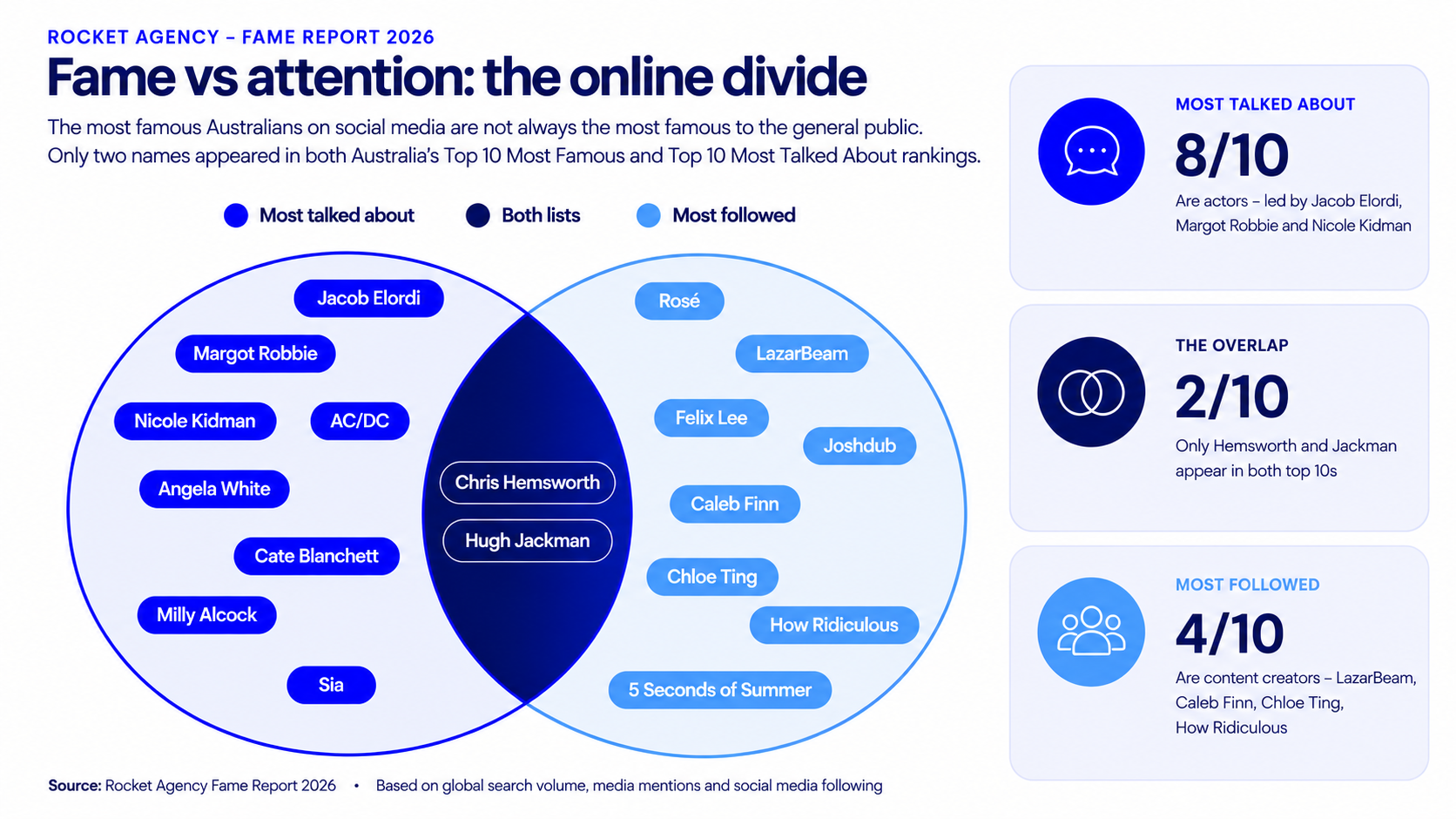
The report also exposes an important divide: being followed versus being talked about.
The top 10 most-followed Australians and the top 10 generating the greatest search interest and media coverage shared only two names: Chris Hemsworth and Hugh Jackman.
Creators featured heavily among the most-followed rankings, while actors dominated the most-talked-about list.
That difference matters.
A large following represents direct access to an audience. Search activity and media coverage indicate broader public curiosity and cultural attention.
Neither is automatically more valuable. They execute different jobs.
An actor may generate a major spike in public interest around a film release. A creator may have a smaller mainstream media footprint but maintain daily access to millions of viewers.
One produces concentrated attention — the other can provide consistent distribution.
Brands are no longer just borrowing fame
The collapse of the influencer-celebrity divide is fundamentally changing what brands are buying.
Historically, celebrity endorsements were about borrowing fame. Brands associated themselves with someone recognisable and hoped that some of that awareness would carry over.
Creator partnerships work on a different model.
Brands are not just buying recognition. They are buying trusted distribution, engaged communities and the ability to influence purchasing decisions.
In many categories, creators can now be more commercially valuable than traditional celebrities because they combine reach with measurable performance. They understand how to tell stories on social platforms, how algorithms shape distribution and how their audiences respond.
The shift has also forced traditional celebrities to adapt. Major endorsement deals increasingly depend on having a meaningful social presence. Record labels, film studios and sporting organisations now place greater emphasis on audience ownership because brands expect more than fame.
They expect talent who can consistently reach and engage consumers across digital platforms.
Celebrity alone is no longer enough. Influence now needs to be demonstrated, not simply assumed.
.jpg)
.png)
.png)
.jpg)
.jpg)
.jpg)
.jpg)
.jpg)
.jpg)





.png)
.png)







.png)
.png)
.png)
.png)
.png)
.png)
.png)
.png)
.png)
.png)
.png)
.png)
.png)
.png)
.png)
.png)
.png)
.png)
.png)
.png)