United States
 Australia
 United Kingdom
 Singapore
 Malaysia
 Thailand
 Indonesia


YouTube Creators Are Now Part of Australia’s National Cultural Archive. They Belong There.
For the first time, Australian YouTube creators are being formally preserved as part of our national cultural history. Following the launch of the NFSA’s inaugural Creator Capsule, we explore why the recognition matters and what it says about the growing cultural and economic impact of Australia’s creator economy.
For the first time, Australian YouTube creators are being formally preserved as part of Australia's national cultural history.
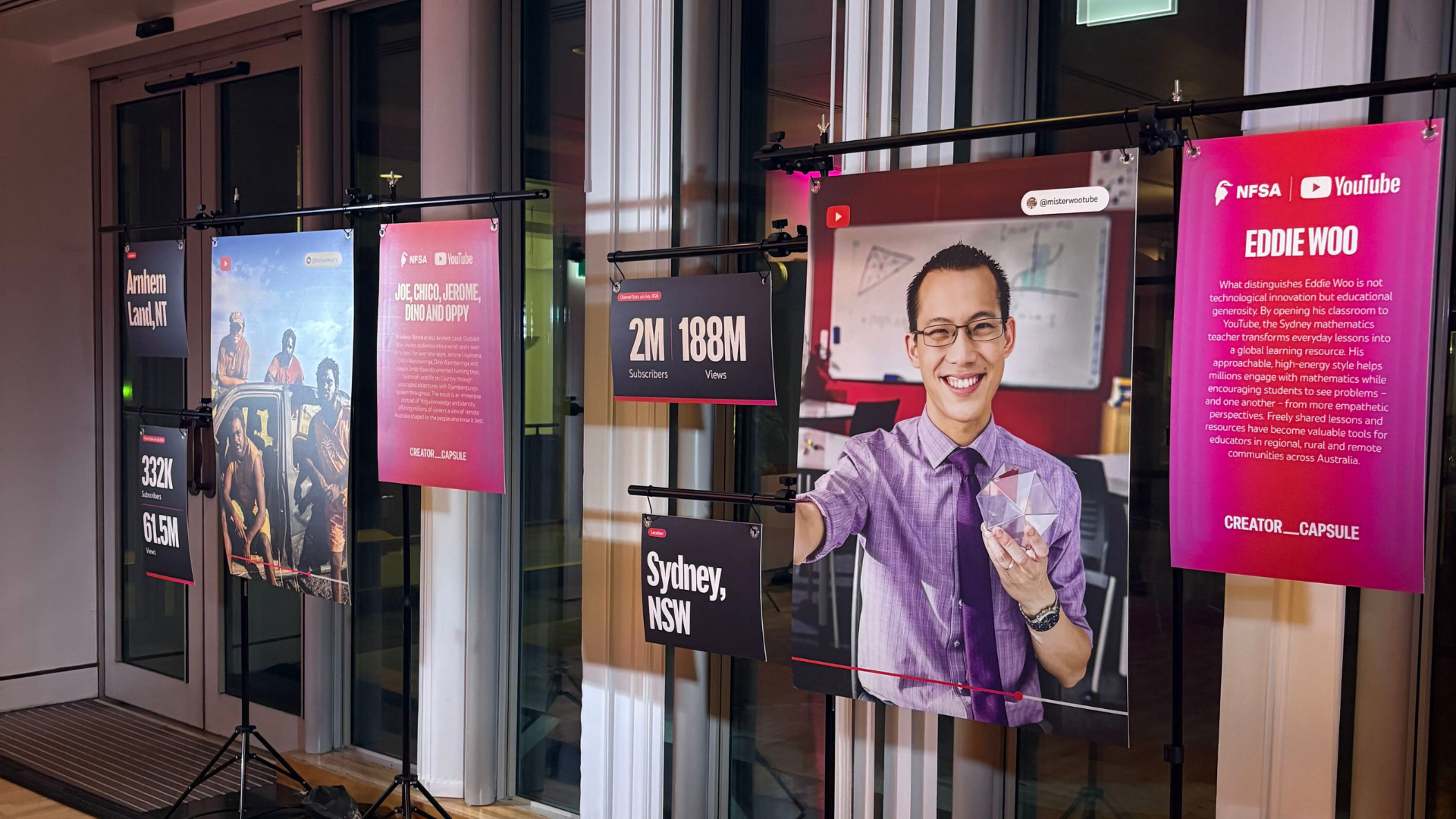
In a global first, the National Film and Sound Archive of Australia (NFSA) has partnered with YouTube to create its inaugural Creator Capsule, selecting ten Australian creators whose work will become part of the national audiovisual collection.
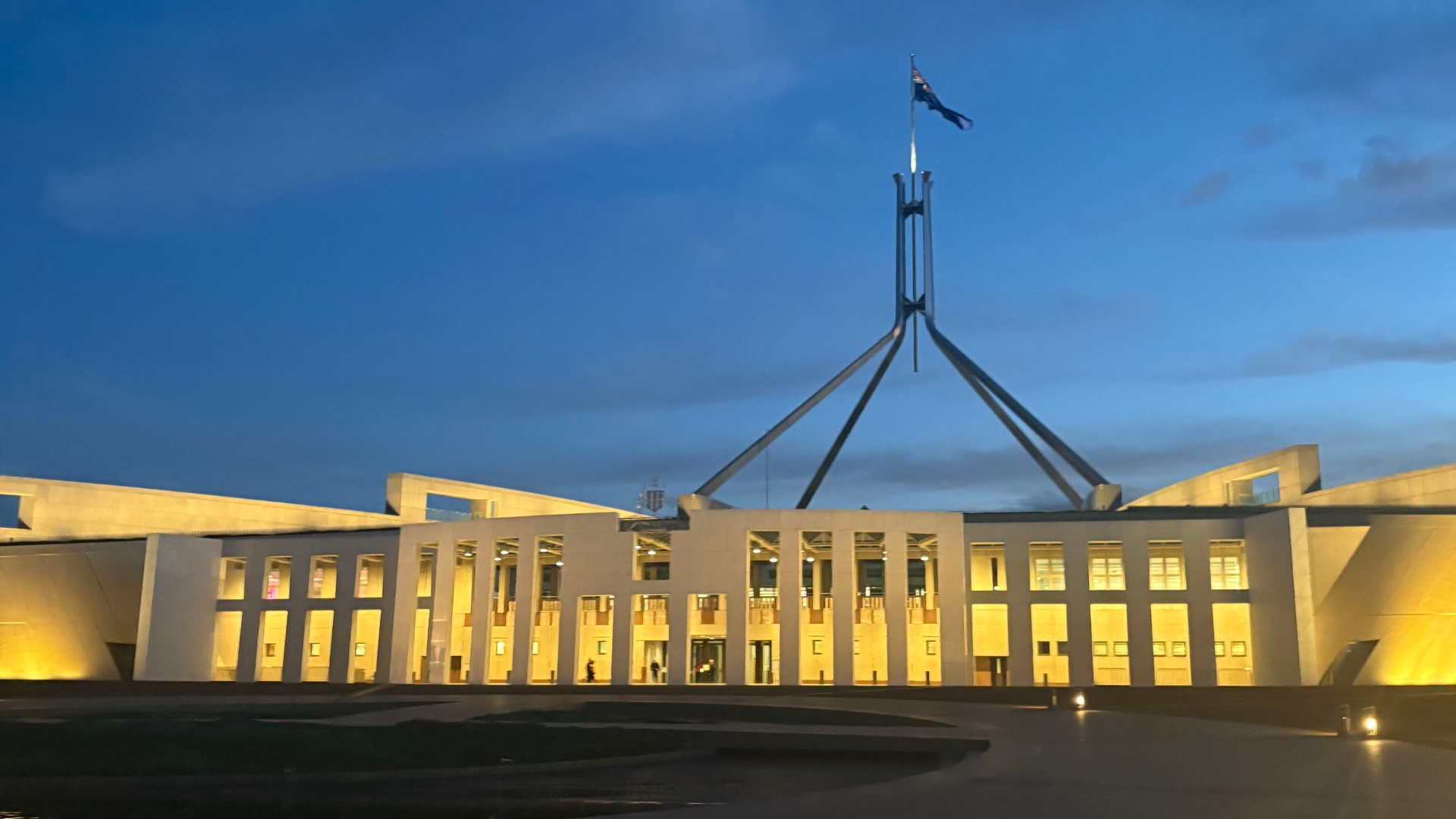
Fabulate attended the announcement at Parliament House in Canberra, where The Hon Tony Burke MP, Minister for the Arts recognised Beau Miles, Bounce Patrol, Natalie Tran's communitychannel, Eddie Woo, GLITCH Productions, Mighty Car Mods, Outback Boys, superwog, Tash Sultana and Wengie for their contribution to Australia's cultural heritage.
Together, these creators have built a global subscriber base of 84 million and generated more than 36 billion views.
But the importance of this moment goes well beyond some very large audience numbers.
For an industry that is still sometimes described as the "creator economy", as though it exists somewhere outside the established media and entertainment industry, the NFSA's decision represents something significant.
Creator content is now part of Australia's cultural record.
And when you look at how Australians consume media, the audiences Australian creators are reaching and the businesses being built around them, there is a compelling case for why it belongs there.
What should Australia's cultural archive look like in 2026?
For much of Australia's history, deciding what should be preserved by institutions such as the NFSA was relatively straightforward.
Film existed on film, television was broadcast and recorded, music had physical releases, radio programs could be archived and newspapers and magazines left behind physical editions.
The internet made that considerably more complicated.
Some of the most influential Australian media being produced today exists entirely within digital platforms, while the audience participation surrounding that content can be almost as important as the content itself.
The NFSA has been collecting individual YouTube videos since 2013, but the Creator Capsule represents a much broader attempt to capture this part of Australian culture. The Archive will accession 300 videos from the ten creators alongside oral histories and contextual material documenting their work and creative processes.
It will also preserve associated interactions including likes, views and comments.
That might sound like a small distinction, but it says something important about how media has changed.
Creator culture cannot always be understood by watching a video in isolation. The communities that develop around creators, the conversations happening underneath their content and the way audiences respond, share and participate are part of what gives that content cultural significance.
The NFSA itself describes platforms such as YouTube as playing a role in shaping national conversations, cultural trends and communal identity.
If our national archive is intended to help future generations understand what Australian culture looked and sounded like, then increasingly that means preserving what happened on our screens as well as what happened on our television screens.
In 50 years, people will expect to find YouTube
Perhaps the most compelling explanation for the Creator Capsule came from NFSA Chief Curator Meagan Loader.
"In 50 years, when Australians come to the NFSA to find the audiovisual stories that defined our time, they'll expect to see YouTube."
Loader argued that this material needs to be acquired now so it can sit alongside Australia's television, radio, music, podcasts, games and films.
That is really what this moment represents.
YouTube is not being put into a separate archive for internet culture. The work of Australian creators is being preserved alongside the formats and storytellers that have traditionally formed our understanding of Australian media and culture.
The audience has already made much of that transition.
Australian stories are no longer limited by Australia's population
There is another reason these creators deserve to be considered part of Australia's cultural history: their influence extends considerably beyond Australia.
More than 90 per cent of watch time on content produced by Australian YouTube channels now comes from audiences outside Australia, according to research conducted by Oxford Economics.
That changes the equation for Australian storytellers.
For decades, Australia's relatively small population has placed natural limitations on the scale of domestic media businesses. Success beyond that market often required an international distributor, broadcaster, publisher, studio or record company willing to take Australian work to the world.
Creator platforms have dramatically lowered that barrier.
The ten creators selected for the NFSA Creator Capsule demonstrate how many different forms that cultural export can take.
Eddie Woo opened his Sydney mathematics classroom to YouTube and turned everyday lessons into a global educational resource, including resources used by educators in regional, rural and remote Australian communities.
Natalie Tran's communitychannel was helping define what Australian YouTube could look like before the creator economy had a name. By 2009, Tran had become Australia's most subscribed YouTuber, turning everyday experiences into comedy for a global audience.
Mighty Car Mods started on a Sydney driveway and developed into a global automotive media brand, combining DIY car culture with sophisticated filmmaking and storytelling.
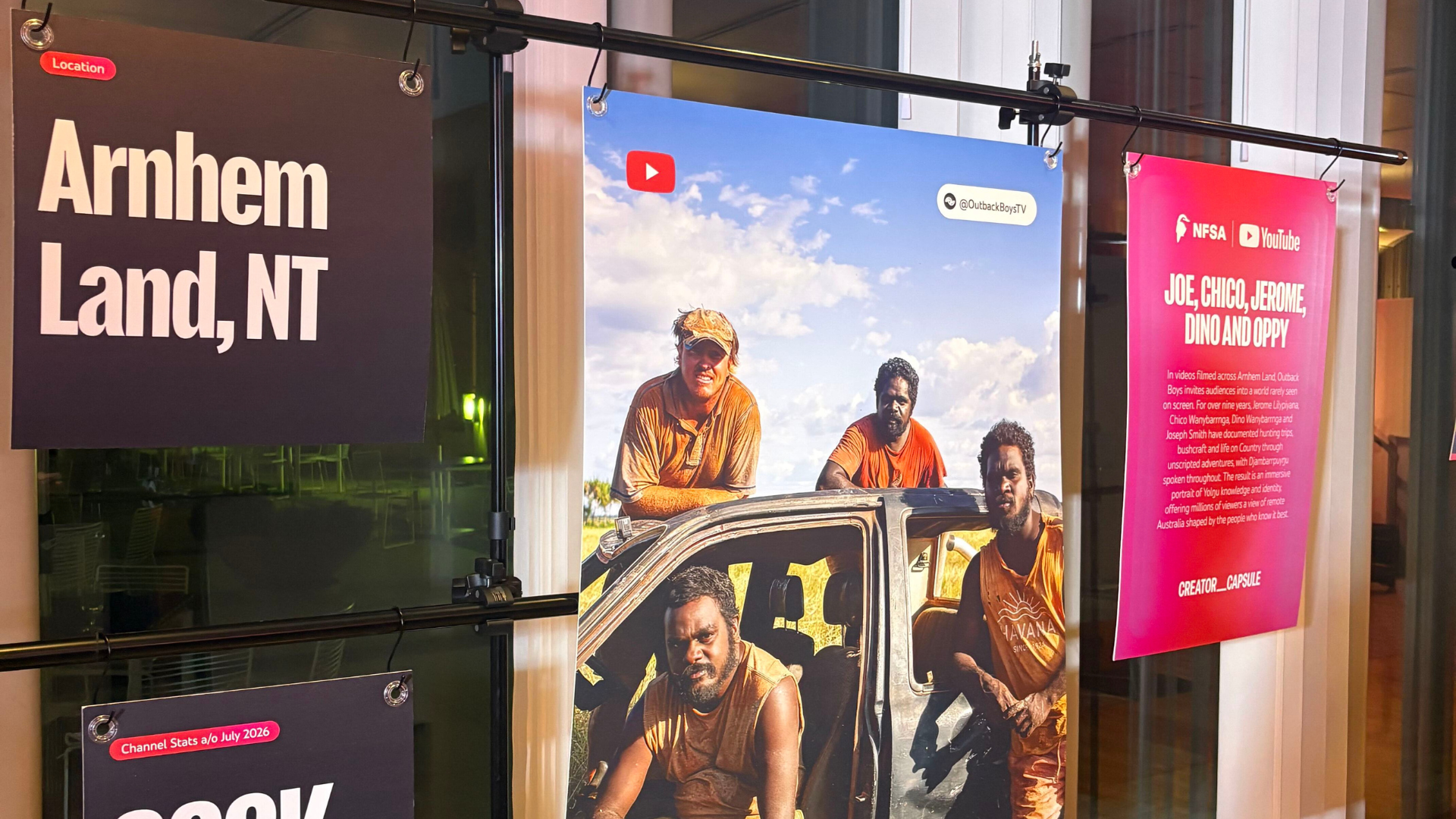
Outback Boys documents hunting, bushcraft and life on Country across Arnhem Land, with Djambarrpuyŋu spoken throughout, taking Yolŋu knowledge, identity and perspectives on remote Australia to audiences around the world.
Tash Sultana turned intimate bedroom recordings and live looping into an international music career, while Bounce Patrol has taken Australian children's entertainment to an enormous global audience. Wengie, superwog and Beau Miles each represent very different forms of Australian storytelling, from beauty and identity through to suburban comedy and regional adventure.
Different genres, different audiences and different creative careers, but all Australian stories finding audiences far beyond Australia.
The NFSA notes that 91 per cent of Australian adults now use an online service to watch video content every week.
Where Australians find stories, entertainment, education and communities has changed, so it follows that the institutions responsible for documenting those stories need to change with them.
From creator channels to Australian media businesses
The cultural argument becomes even stronger when you look at the industry developing around this content.
According to Oxford Economics research commissioned by YouTube, YouTube's creative ecosystem contributed more than AU$1.1 billion to Australia's GDP in 2025 and supported more than 18,000 full-time equivalent jobs.
This economic impact goes considerably further than advertising revenue paid to an individual creator. Oxford Economics' methodology includes creators' employees and businesses and freelancers in the supply chain that derive a substantial proportion of their revenue from creators.
YouTube's first-party data also shows the number of Australian channels generating six figures or more in annual revenue increased by more than 9 per cent year on year, while Australian channels uploaded approximately 5.5 million hours of content over the past year.
These numbers challenge the lingering idea that creators are individuals making videos while the "real" media industry operates somewhere else.
Successful creator businesses employ producers, editors, animators, designers and other creative professionals. They rent studios, purchase production services, develop intellectual property, form commercial partnerships and generate income that flows through a much wider creative supply chain.
The platform economics have developed around that ecosystem too. For eligible long-form advertising, YouTube pays creators 55 per cent of net advertising revenue, creating a model where building an audience can directly fund the production of more content.
Australia's creator economy is not simply producing content. It is increasingly producing businesses.
GLITCH might be a glimpse of where this goes next
Of the ten creators included in the inaugural capsule, GLITCH Productions provides a particularly interesting example of where this model can lead.
Founded in 2017 by Thai-Australian brothers Kevin and Luke Lerdwichagul, GLITCH built its business on YouTube and has subsequently produced global animation hits including Murder Drones and The Amazing Digital Circus.
The company now employs more than 100 people worldwide and that starts to challenge some of the language we use around creators.
Is GLITCH a YouTube channel? A creator business? An animation studio? A media company? An entertainment company exporting Australian intellectual property around the world?
GLITCH’s success suggests that the answer can be all of them.
For the Australian creative industries, that should be exciting because technology has democratised not only who can tell stories, but who can build businesses around them.
The next significant Australian entertainment company does not necessarily need to begin with a television commission, film funding, a publishing deal or a record contract. It could begin with creators developing an idea, finding an audience and building the commercial infrastructure around that audience themselves.
Creators don't need an archive to make them legitimate (but it’s nice to be included)
There is something significant about seeing Beau Miles, Bounce Patrol, Natalie Tran's communitychannel, Eddie Woo, GLITCH Productions, Mighty Car Mods, Outback Boys, superwog, Tash Sultana and Wengie enter the same national institution responsible for preserving Australia's film, television, radio, music and audiovisual history.
But their inclusion should not be interpreted as the moment creator content finally became legitimate.
The audiences arrived long ago, their businesses followed and the jobs created followed. Australian creators started competing globally and, in many cases, building audiences substantially larger outside Australia than within it.
What the NFSA has done is recognise that Australia's cultural record needs to reflect that reality.
For future generations trying to understand Australian culture in the first decades of the 21st century, television programs, films, music and radio will continue to tell an important part of our story.
But they won't tell the whole story.
They will also need the YouTube channels, the communities that formed around them and the Australian creators who discovered that they didn't need permission from the traditional media establishment to find an audience.
The NFSA's Creator Capsule does not legitimise creator culture, but it recognises the cultural significance Australian creators have already earned.
.jpg)
.png)
.png)
.jpg)

.jpg)
.jpg)
.jpg)
.jpg)
.jpg)


.jpg)







.png)
.png)








.png)
.png)
.png)
.png)
.png)
.png)
.png)
.png)
.png)
.png)
.png)
.png)
.png)
.png)
.png)
.png)
.png)
.png)
.png)
.png)